Diabetes is divided into 2 types.

Type 1

Your body no longer produces insulin due to disease/ trauma/ genetics.

Symptoms are:

  • Excessive thirst
  • Frequent urination
  • Weight loss
  • Blurred vision
  • Fatigue

– Possible reasons are past viral infections and genetic predisposition.
– Age: Under 30.

Type 2

Your body no longer responds to the insulin in your blood, this is due to insulin resistance.

  • Reasons are:
  • Medicine
  • Weight gain
  • Stress
  • Pancreatic diseases

– Type 2 diabetes affect 10% of the world’s population.

In both types, the diet should be adjusted to limit starch and sugar.

In type 1 diabetes, insulin is used immediately as part of the prescribed medication, and carbohydrates in each meal must be carefully counted.

In the management of type 2 diabetes, treatment typically begins with oral medications. However, lifestyle changes, particularly through diet and exercise (leading to weight loss), can significantly impact the condition. In some cases, following strict health guidelines may even eliminate the need for medication altogether. This is known as remission, meaning that while you remain susceptible to high blood sugar, you may no longer require medication, although you will need to continually monitor your diet and portion sizes for life.

What is sugar/ starch/ fructose/ carbohydrates?

Carbohydrates and starch are terms describing a large food group. The building blocks of this food group are sugars. Sugar is a collective term for the sugar found in all starch, fruits, vegetables, dairy, etc.

Foods in this group include:

Pasta, bread, potatoes, fruits, some vegetables, sugar, dairy, rice, flour, sweet potato, fruit juice, honey, flavoured milks, oats, cookies, corn, syrup, yoghurt, maize porridge, muffins, etc.

The cells in your body use these starches as energy. Your cells work like a locked door, and insulin acts like the key that must unlock the door for the starch (which has broken down into sugars through digestion) to move from your bloodstream into the cell. It is then used inside your cell for energy.

Diabetes and inflammation

Inflammation is like a mild infection that causes damage to the body’s cells over an extended period. The problem is that you are not always aware of the inflammation, and this damage occurs slowly over many years. Many diseases are linked to untreated long-term inflammation.

The best way to prevent inflammation in the body is to have a healthy digestive system. When the gut bacteria are balanced, they ferment the right components to fight inflammation.

Diabetes is considered an inflammatory condition, and high blood sugar can therefore cause damage to cells in the body and nerves. Typical damage includes eye damage, sore feet, kidney damage, heart disease, and possible stroke.

Following an anti-inflammatory diet can significantly reduce this damage.

Anti-inflammatory foods include: Garlic, onions, cruciferous vegetables (broccoli, cauliflower, brussels sprouts, cabbage), spinach and other leafy greens, capsicums (bell peppers), almonds, berries (strawberries, blueberries, raspberries, blackberries), grapes and grape seed extract, fatty fish (salmon, trout, mackerel, anchovy), mushrooms (portobello, shiitake, reishi), green tea (decaffeinated), avocado, sugar-free dark chocolate, cherries, tomatoes, olive oil (unheated), citrus fruits, beet, turmeric (curcumin).

These foods should preferably be consumed weekly.

The critical role of fibre

Fibre plays a critical role in diabetes, supporting gut bacteria and also lowering the GI of foods. The aim is to consume 30 different fibres per week.

Certain fibers have been shown by research to play a direct role in insulin resistance and can even be administered as medication to combat insulin resistance in the body.

Important fibres include: Inulin and Inositol sources:

Inulin: Chicory (drinks such as Woody Cape Chickory), leek, asparagus, garlic, onions, banana, barley, wheat, vegetables, oats and bran.

Inositol: Chickpeas, buckwheat, dried beans, lentils, nuts, seeds, oils and vegetables. 

Diabetes and GI

The glycemic index (GI) measures how readily a type of food can release the sugar it contains over a period of hours. The faster the sugar in the food goes into the bloodstream, the higher the GI, and the faster and higher it raises blood sugar levels. Therefore, food with a high GI should not be used regularly (daily/ weekly).

The slower a food releases sugar into the bloodstream, the lower its GI, which helps blood sugar levels rise more gradually and stay lower. Low GI foods cause a slower and more gradual rise in blood sugar, which in turn reduces the demand for insulin. When blood sugar levels rise slowly, the body needs less insulin to manage them, helping to prevent insulin spikes. This can improve insulin sensitivity over time and reduce the risk of insulin resistance, which is beneficial for managing type 2 diabetes and preventing excessive strain on the pancreas. For this reason, low GI foods should be prioritised in your diet.

There is a nice complete list of all starch-containing foods on the next web page: GI Foundation

Blood sugar levels and curves

Keep in mind that your blood sugar doesn’t reset each morning. It operates in a cycle that can last up to 36 hours. This means that what you eat for breakfast today can still impact your blood sugar levels the following morning.

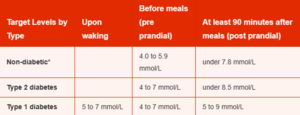
Targets for blood sugar values
.

Dinner and sleep/ waking up at night: When a lot of starch is taken for dinner, the blood sugar/ insulin secretion may cause restless sleep, possibly struggling to fall asleep, waking up during the night, or waking up very early and not being able to fall asleep again. Sleep is a very important time for your body to recover and perform essential processes. There are also other essential hormones secreted during sleep, so it is crucial to sleep enough. 

Therefore, always eat a protein for dinner and focus on vegetables rather than starch.

Before a meal: Preliminary research suggests that it is good for blood sugar control to eat a salad/ vegetables as the first part of a meal or as a pre-meal. Therefore, it is advisable to start main meals with vegetables/ salads. It is indicated that you can also use a vinegar sauce such as balsamic vinegar/ similar salad sauce/ vegetable sauce, which helps to keep the blood sugar from rising too drastically after meals.

Diabetes and hormones:

When estrogen and cortisol (stress hormones) in women and cortisol in men are not balanced correctly, it causes insulin resistance. It is therefore very important to do relaxation exercises and regular physical exercise to balance these hormones in order to keep your body’s insulin secretion in the right amounts. It is advisable to consult a biokineticist or physiotherapist for the right exercises.

Diabetes and stress/ infection:

When you experience a lot of stress, your blood sugar may rise. In such times, it is very important to strictly follow your meal plan. During illness, the blood sugar level will also tend to rise. Make sure you get enough rest, receive adequate treatment for your illness, drink plenty of water, and eat healthy during these times.

Diabetes and alcohol:

Alcohol is broken down into sugars and has a high carbohydrate content. It can also sometimes cause the blood sugar to drop first and then raise the blood sugar much higher hours later. Alcohol is not recommended for diabetes as a rule. Nowadays, there are a few alcohol-free drinks that look and almost taste like the original. It would be best to use these options. Alternatively, 1 tot whiskey or ½ glass of dry wine can be taken with a meal once a week. There is no research that really supports that alcohol contains any health benefits that other foods do not.

Diabetes and fruits:

Fruits are broken down into fructose and sucrose, which are both sugars. Fruits do contain many vitamins and some minerals as well as healthy fibre and should therefore not be completely avoided. Use fruit as part of a meal and not alone, which will reduce the effect on blood sugar. Stick strictly to 1 serving at a time and choose low GI fruits where possible. Avoid fruit juices as they contain no vessel and can therefore easily raise blood sugar.

Diabetes and juices/ sodas/ energy drinks:

Most juices, sodas, and energy drinks keep the blood sugar level constant. All such drinks contain a degree of energy even if they have more artificial sweeteners than sugar. Energy drinks contain a lot of caffeine as well as other herbs that let the adrenal system secretes extra hormones and so it can also have an effect on insulin resistance. Daily soda drinks should not be used. Stick to tea and moderate amounts of coffee and drink lots of water. Zero/ sugar-free options can be used weekly.

Diabetes and treats:

Cakes, tarts, other puddings, cookies, cakes, ice cream, pudding, jelly, sugar candies, fudge, marshmallows, toffies, licorice, chocolate, sweet breads, fruit cakes, fruit breads, fruit rolls, and fruit candies with sugar above fruit/ nuts/ seeds with chocolate or sugar candy, etc. contain all a lot of sugar and mostly unhealthy fats. These treats should be avoided by diabetics. Diabetic treats, pastries, and treats may be taken from time to time but must be weekly and not daily. Portion control will still be very important and it is better to slightly shift the standard by enjoying more nuts and seeds with spices/ cocoa as to use pudding and baked goods regularly.

Diabetes and crackers/ salt cookies/ bars:

Crackers, salt cookies, and energy sticks can be very high in sugar, fat, and salt and are therefore not suitable for use by diabetics. Other options like seed sticks can be an option, especially if a healthy recipe is used and it is self-made. There are also a few seed crackers available in grocery stores that are very low in carbohydrates and will be marketed as banting/ low carb or even vegan. If the ingredients are made of chickpeas, split peas, and bones/ lentils instead of flour will be a better option and a better effect on blood sugar.

Diabetes and chips:

Hard potato chips are a high GI treat that also contains sugar as a regular ingredient. Traditional trade names are not acceptable for diabetics and certain vegetables and pulse alternatives may be used rather than small quantities. There are chips made from lentils/ other pulses as well as beets/ carrots. It cannot be used without restriction.

Diabetes and spreads/sauces: 

Jam, peanut butter, syrup, mayonnaise, tomato sauce, chutney, sweet chili sauce, barbecue sauce, sandwich spreads, chocolate spreads, and even seasoning mixes all contain sugar. It’s crucial to choose options that specifically indicate they are suitable for diabetics or are labeled as “zero” or “low carb.”

Diabetes and high fat intake: 

Research suggests a link between high animal fat intake and elevated blood sugar levels. Especially over a 36-hour period, a high-fat meal can significantly raise blood sugar for a day or longer. Saturated fats come from animal sources such as visible fat on meat cuts, any meat product in a casing like sausages, biltong, and dry wors, cheese, full cream dairy, cream, cream cheeses, meat sauces, foods cooked in animal fat like crackling, and dishes with creamy sauces like cheese or mushroom sauce. Unsaturated fats are better options found in nuts, seeds, avocados, olives, fatty fish, and certain grains and legumes. Although healthier and often anti-inflammatory, these fats are still energy-dense, so portion control is essential.

Diabetes and overweight: 

Research indicates that blood sugar levels are more stable when you’re at your target weight. Losing weight when overweight significantly helps lower blood sugar, cholesterol, and blood pressure. Portion control and exercise are the best long-term methods to maintain a healthy weight.

Diabetes and exercise: 

When blood sugar levels are high and not dropping too low regularly, exercise can be performed normally and offers various benefits to your body. Before exercising, consume a low/ medium GI snack, such as a portion of banana and 30 g of nuts. Water is preferable during exercise over energy drinks. If serious sports participation is planned, consult a dietitian regarding snacks and energy/ electrolyte drinks during exercise. Watch for symptoms of low blood sugar during and after exercise. A low GI snack can be consumed post-exercise if desired, ideally including protein, like a meatball with vegetables.

Can I “cheat” with extra pills/insulin: 

Some diabetics may think they can simply increase medication, especially insulin, and eat as they please. This approach has severe long-term effects on the body and is not a substitute for a healthy lifestyle.

Diabetic products: 

There are alternatives available for drinks, salts, soups, sweets, breakfast cereals, and more that have a much better effect on blood sugar levels than the products we traditionally consume.

All food contains energy and some degree of starch (if it’s a natural starch-containing food), so no drink or food should be consumed without portion control. Sugar-free foods and drinks are a better alternative with a lower chance of raising blood sugar, but they can still affect blood sugar levels and weight.

Treats:

It’s better to stay within low carbohydrate limits and practice portion control, but you can still enjoy desserts and treats. Offering to bring dessert to a barbecue/ dinner allows you control over what is served. Remember that desserts/ fruit should always be consumed after a meal with protein, not between meals.

Banting/ carb free/ flours that may be used to lower inflammation:

Coconut flour/ Almond flour/ Flaxseed meal/ Macadamia nut flour/ Plantain flour/ Carob flour.

Below is a list of suppliers that can be used:

Checkers Simple Truth’s gluten-free and sugar-free products can be used. Remember that gluten-free flours still contain starch and recommended portions should still be used. The use of gluten-free products is recommended because they are typically made with flours that contain more fibre and protein, making them better for blood sugar. Gluten-free options will also be more anti-inflammatory in your body. Diabetes is considered an inflammatory condition, so foods that are anti-inflammatory should be used to keep your body as healthy as possible.

Products – Carbsmart® (available at many grocery stores and pharmacies too).

Canderel (available at many grocery stores and pharmacies too).

Nova Chocolate – Vegan Sugar-Free & Gluten-Free Chocolate (available at many grocery stores and pharmacies too).

Dischem has a variety of sugar-free and gluten-free foods and flours.

The CDE specialises in diabetes education for health professionals and also has an online store where diabetic products can be purchased: Smart Food Choices | CDE Online.

The GI Foundation has many food lists that can be used when buying food to always be able to buy the low GI option. There are also recipe books for sale on their website that are all low GI and are meant to help better control blood sugar.

Woolworths offers alternatives to potato chips made from vegetables/ lentils and other legumes.

Diabetes and fasting:

When you are not using insulin, fasting can be practiced. Fasting means abstaining from eating and also from consuming any foods/ drinks that might raise blood sugar or stimulate insulin secretion, for a limited period. The recommended fasting period to try is 24 hours. This means, for example, fasting from one dinner to the next day’s dinner. During this time, only water should be consumed.

Fasting should be approached carefully, and it’s not realistic to jump straight into a full 24-hour fast. There are two ways to start fasting gradually:

  1. Shift your dinner earlier and your breakfast later. For instance, move dinner 1 hour earlier and breakfast 1 hour later (e.g., 5:00 PM to 8:00 AM, which is 15 hours). Then, shift breakfast another 2 hours later (e.g., 5:00 PM to 10:00 AM, which is 17 hours). You can gradually increase the fasting hours until reaching 24 hours. Monitor your blood sugar upon waking up and halfway through the day to ensure it doesn’t drop too low.
  2. Another way to start fasting is to replace meals with chicken broth (without any of the vegetables/ meat, just the liquid). Replace two meals with chicken broth and avoid eating other meals/snacks in between. Afterward, you can attempt a full 24-hour fast.

Breaking a fast: Never break a fast with a meal containing any starch. Use a healthy meal of proteins and fats to break a fast. Something like an omelet with vegetables and avocado is a very good meal to break a fast. Because blood sugar works in cycles, breaking a fast correctly helps prevent feeling hungry or craving foods excessively in the following days.

Multivitamins: Because diabetes is an inflammatory condition and insulin and stress hormones also work together and against each other, the following nutrients are beneficial to supplement:

  • B Vitamins
  • Folic Acid
  • Zinc
  • Magnesium
  • Probiotics
  • Resveratrol
  • Vitamin D

.